
.jpg)
Private Equity Insights
Darien Group exists to bridge the gap between exceptional design capabilities and private equity communications. Our library of resources serves as a practical guide for firms looking to refine or redevelop their brand and ensure their story resonates with target audiences.

Featured Videos
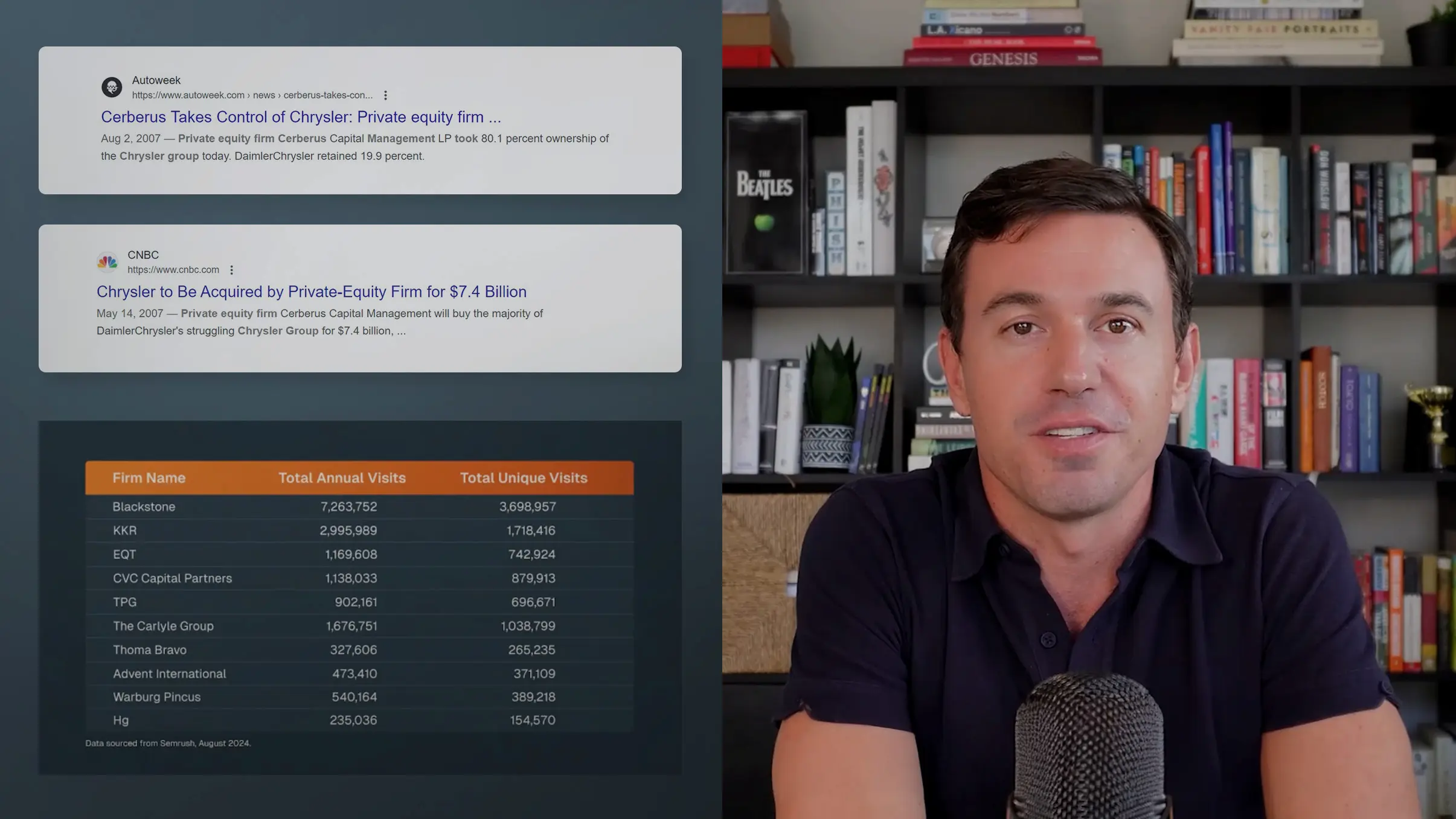

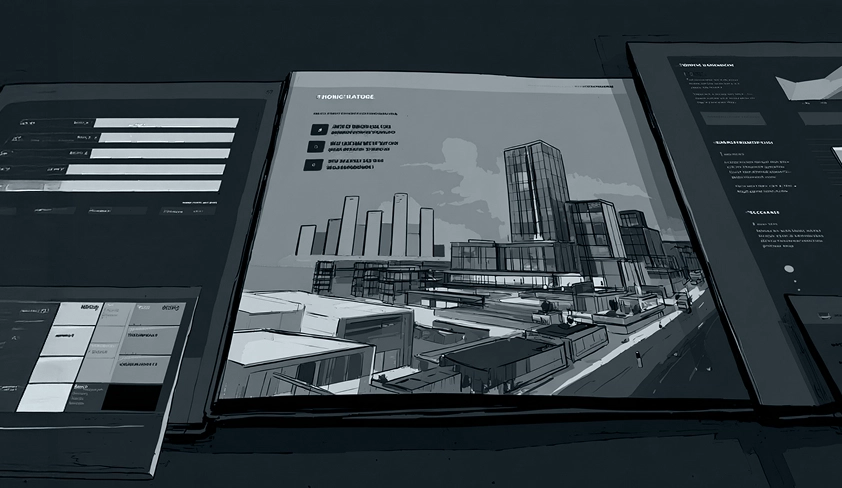
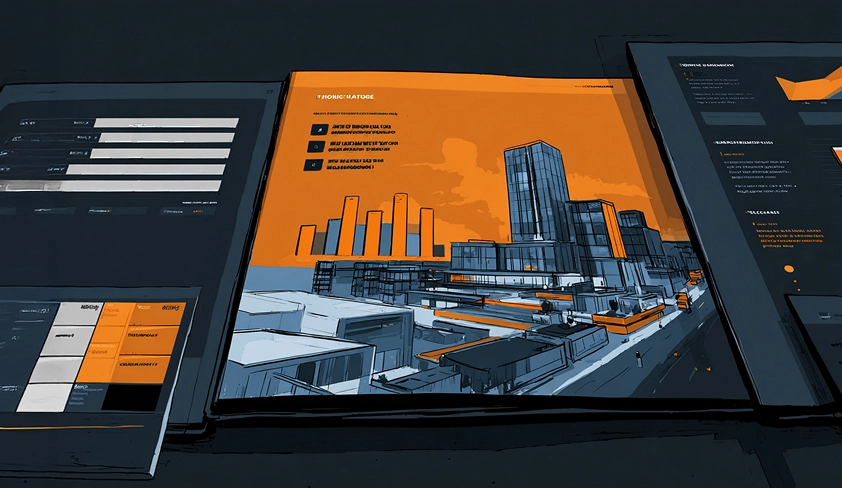

Spend enough time reviewing real estate pitchbooks and you start to see a consistent pattern: there are only two categories. Decks that look and feel institutional, and decks that don’t. And the divide has very little to do with design vocabulary or stylistic preference. It’s about the signals that design quality sends to an audience that reviews hundreds of these materials each year.
Institutional LPs don’t use the language of designers. They don’t talk about kerning or color theory. But they are exceptionally quick at making judgments about professionalism, discipline, and operational maturity. In a pitchbook, design is rarely the story — but it is always part of the psychology.
This creates a strange dynamic in real estate, a category where many managers come from operator or development backgrounds rather than allocator backgrounds. They may be excellent investors, but design is not a natural skill set. And when the pitchbook looks like a 10-year-old template or something assembled by whoever “knows PowerPoint,” LPs draw conclusions far beyond the aesthetic.
Below is a candid look at the design standards that actually matter to institutional LPs, why they matter, and how managers can present themselves with the level of polish investors instinctively expect.
Professional vs. Amateur: LPs Know the Difference Instantly
Most managers underestimate how quickly an LP can tell whether a deck was built professionally. They don’t need to identify the font or critique the color palette; they can simply feel whether the materials look and behave like institutional tools.
The most common red flag is not outdated taste — it’s dated templates. Slides that look like they came from a 2012 PowerPoint file. Generic gradients. Clipart-level icons. Mismatched shapes and colors. Charts pasted in from Excel without any reformatting. Image crops that are slightly off. A deck that looks “stitched together.”
These details may seem trivial, but they accumulate into a very clear impression:
If the manager didn’t invest in presenting their strategy cleanly, where else have they underinvested?
This reaction is not fair in every instance, but it is extremely common.
The good news is that professional design is not difficult or expensive to access. A manager doesn’t need a six-figure agency to create an institutional-grade pitchbook. They simply need someone — internal or external — who understands how to produce clean, modern slides. Someone who knows how to apply basic discipline. Someone who understands that design communicates far more than style.
Institutional Design Isn’t Ornate — It’s Clean
There is a misconception that institutional design means decorative design. In reality, institutional LPs respond to simplicity, not flair.
A premium, mature deck usually has the following characteristics:
- Clean slides with clear hierarchy.
Not walls of text, not ornamental shapes. - Charts that match the visual brand.
Not screenshots from other documents, not mismatched fonts. - Photography that is strong (or intentionally omitted).
Real estate is visual, but bad visuals hurt more than no visuals. - Consistency across slides.
Colors, spacing, image treatments, and layouts should feel coherent.
None of this requires a designer with an MFA. It requires good judgment and discipline. LPs are not looking for beauty — they are looking for maturity.
Photography: A Differentiator When Used Well, a Liability When It Isn’t
Real estate has an inherent advantage over private equity: the asset class is tangible. If the assets photograph well, photography is one of the fastest ways to build connection and credibility.
But this only works when the assets support the story. If the properties are tired, dated, or visually unappealing, showing them hurts more than it helps. Many managers underestimate this dynamic. They assume “showing the real thing” always wins. It doesn’t. LPs form impressions quickly, and mediocre imagery creates subconscious skepticism.
When the assets are strong, show them proudly. When they’re not, build a more abstract visual identity. This is one of the most important judgment calls in real estate materials — and one of the most overlooked.
Design Signals Something Deeper: Discipline
Pitchbooks do not need to be visually innovative. But they do need to be visually disciplined. Discipline is the underlying signal LPs are responding to. Clean decks imply clean thinking. Consistency suggests operational maturity. A professional visual system suggests a manager who is organized, structured, and attentive.
Messy design sends the opposite signal. LPs wonder:
- If the materials look disorganized, what does the underwriting process look like?
- If the visuals are sloppy, how tight is the property management discipline?
- If the pitchbook feels like a patchwork, what does this say about reporting?
None of these implications are necessarily accurate, but LPs make quick, subconscious leaps. In real estate especially — where operator competence is paramount — the leap is hard to avoid.
Avoid the “Broker Memo” Aesthetic at All Costs
Real estate operators often communicate using the same artifacts they use internally: deal memos, OM packets, broker marketing summaries, zoning diagrams, floor plans, maps with arrows. These materials serve a purpose inside the real estate ecosystem, but they are disastrous in fundraising.
Broker memos are dense, cluttered, and unfriendly to non-operators. They assume familiarity with local markets and deal mechanics. They make sense to someone who spends their days touring properties—not someone trying to evaluate an investment strategy across dozens of managers.
When a pitchbook resembles a broker packet, LPs silently categorize the manager as unsophisticated or underprepared. Even if the underlying strategy is compelling, the materials undermine it.
Pitchbooks must be decks, not OMs. They must feel investable, not transactional.
“Institutional Design” Does Not Require Design Vocabulary
Real estate managers sometimes worry they don’t have an eye for design, and they often don’t have a designer in-house. That’s fine. LPs are not grading aesthetic nuance—they’re grading whether the materials feel professional.
Institutional design is not:
- ornate,
- flashy,
- hyper-stylized, or
- filled with dramatic typography.
Institutional design is:
- clean,
- consistent,
- modern,
- unforced.
It is the absence of distraction.
It is the presence of coherence.
A pitchbook that feels effortless is usually the product of someone who knew what to remove, not what to add.
Use Design to Support Skimmability
LPs skim — sometimes aggressively. Good design helps them do this without missing the thread.
A skimmable pitchbook uses:
- clear, thesis-driven headlines,
- visual breathing room,
- layouts that reveal the point quickly,
- and slides that can be understood in a few seconds.
Bad design works against skimming. The eye doesn’t know where to go. Key points get buried. The hierarchy collapses. When LPs skim a messy deck, they lose the narrative — not because the story wasn’t good, but because the design didn’t help them find it.
Skimmability is not just about writing. It is about design that respects how people actually read.
Design Doesn’t Win the Mandate — But It Can Lose It
No LP commits to a fund because the pitchbook is beautiful. But LPs do walk away from managers whose materials feel amateurish or inconsistent. They don’t always say it directly, but you feel it in the lack of follow-up, the muted enthusiasm, or the subtle shift from curiosity to polite disengagement.
Design does not create conviction.
But it does create permission for conviction.
A good deck opens the door wide. A sloppy deck makes the LP second-guess whether they should step through it.


A real estate manager's website isn’t just another marketing asset. It quietly becomes the anchor of the entire visual brand. It defines the look, feel, and tone of everything else the firm produces — pitchbooks, quarterly updates, advisor materials, deal announcements, and even LinkedIn posts.
Most firms don’t choose this dynamic intentionally. It happens because the website is the one artifact that lasts the longest, reaches the widest audience, and is the hardest to change. Whether the firm realizes it or not, the website becomes the foundation upon which all future storytelling sits.
Why the Website Ends Up Becoming the Anchor
Real estate managers seldom rebuild their sites more than once every five to seven years. In some cases, it’s much longer. Few firms have dedicated marketing staff; the website becomes an occasional project handled by an IR professional, a CEO, or an outside partner during quieter periods. As a result, the decisions made during a redesign tend to persist far longer than anyone expects.
This longevity gives the website an outsized influence on the rest of the brand system.
Everything else must harmonize with it — not because of dogma, but because investors implicitly expect consistency.
A pitchbook may change with every fund.
Quarterly reporting updates four times a year.
Marketing documents evolve as the story evolves.
But the website remains.
Firms often don’t realize how much they’re depending on it until they’ve lived with a weak one for seven years.
The First 10–30 Seconds: What a Visitor Must Feel
Most people who visit a real estate website aren’t browsing. They’re assessing. In the first half-minute, the site needs to deliver a simple, confident impression:
- This manager is competent.
- This manager is professional.
- This manager has a clear identity.
- This manager has nothing messy or improvised hiding in the margins.
It also needs to be easy to use.
If someone arrives only to find a bio or check the portfolio, there should be zero friction. Navigation is a credibility signal in its own right.
What you want to avoid is the opposite: muddled messaging, dated visuals, generic statements, or anything that feels improvised. When a site is an 8 instead of a 9 or 10, investors feel it.
The Website Defines the Visual System for Everything Else
Pitchbooks, quarterly letters, updates, fact sheets — these materials all inherit the design logic of the website. Even within the constraints of PowerPoint, a designer can echo the website’s typography, spacing, color palette, tone, and layout rhythm. Professional investors notice when materials feel like part of the same system, even if they can’t articulate why.
Consistency creates familiarity.
Familiarity creates trust.
Trust creates ease.
The website doesn’t need to match everything perfectly — PowerPoint will never offer the same palette — but it must establish a system that downstream materials can follow. When that system is missing, every subsequent asset feels a little more improvised.
Permanence vs. an Evolving Market
Real estate cycles are fast-moving. Property types fall in and out of favor. Interest rates reshape the entire logic of value creation. Managers sometimes worry that their website will become outdated as the market turns.
It shouldn’t — at least not the parts that matter.
Core pages should be built around enduring truths: what the firm does, why its strategy makes sense, who leads it, and how it creates value. These elements shouldn’t change every time the Fed moves. If they do, the brand strategy was too tied to a moment in time.
Market commentary belongs elsewhere — in the Insights section, in letters, in articles.
The website is the permanent structure.
Content is the flexible layer that sits on top of it.
Real shifts to the website usually come from product expansion, not macro change. When a firm launches additional funds or new investment vehicles, the site must accommodate those additions cleanly. That’s where thoughtful structure matters.
What a Website Can Express That a Pitchbook Never Will
Unlike pitchbooks — which are linear, static, and fundamentally instructional — a website can create an experience. Motion, transitions, video, spacing, and interactivity all contribute to a sense of calm, intentionality, and sophistication.
A website also offers depth. Someone can skim the homepage and immediately understand the basics, but someone else can dive deeper into narrative, background, market rationale, team philosophy, or thought leadership. It accommodates both types of visitors without forcing either into the wrong path.
And increasingly, websites do something else:
They communicate with machines — search engines, LLMs, and discovery algorithms. A structured, technically sound, well-written site will surface more often, influence more decisions, and widen the top of the funnel. A weak one remains invisible.
The Quiet Constant That Shapes Everything Else
In real estate — where cycles shift, investment vehicles expand, and materials evolve — the website is the quiet constant. It holds the brand system together. It sets the tone for every first impression. It becomes the reference point for every subsequent deck, document, and digital touchpoint.
When it is strong, the rest of the communication ecosystem has somewhere solid to stand. When it is weak, everything downstream gets harder than it should be.
A website is not simply a digital brochure.It is the chassis on which the entire brand sits.


Most real estate websites do not look institutional. They look like developer sites, or property manager sites, or small-business sites that have been lightly reskinned for the investment world. The gap isn’t just aesthetic — it’s a credibility gap. When a manager is unknown to an investor, much of the early evaluation happens through the website, and investors immediately sense whether a firm is operating at a high level or improvising.
What separates an institutional-quality website from everything else is not a specific color, or a specific typeface, or a specific layout pattern. It is the underlying quality of the design. And quality, in this space, is largely about clarity, restraint, spacing, and a point of view that feels considered rather than thrown together.
Real estate managers often want their website to communicate seriousness and sophistication. But many unintentionally communicate the opposite — not because they lack real institutional capability, but because the website carries visual cues that drift more toward “developer marketing collateral” than “investment manager.”
Getting this right matters. The website sets the tone for every other communication an investor will see.
Institutional Quality Is Not About a Specific Look — It’s About Execution
There is no single “institutional aesthetic.” Hines uses deep crimson, a color many investment managers would avoid entirely, and still delivers one of the strongest brand experiences in the industry. Blackstone and Starwood lean heavily on dark palettes and bold typography. Others take a lighter, more editorial approach.
Institutional quality comes from execution, not conformity. Good websites feel:
- properly spaced
- thoughtfully structured
- quiet rather than busy
- modern without being trendy
- confident without overstatement
The real test is simple: does the site feel like something built by design professionals who understand both the category and the audience? An investor senses the answer immediately.
Clients often want a rulebook — “which colors signal institutional?” or “which fonts should we avoid?” — but these questions miss the point. Institutional is not a style. It is a standard.
The Structure That Supports an Institutional Brand
Nearly every real estate manager ends up with a similar macro structure, because the structure reflects how investors look for information. The website should feel intuitive, even predictable, while still expressing a distinct identity.
A clean layout usually looks something like:
Homepage → About/Approach → Portfolio → Team → Insights (or News) → Contact
Managers can name these sections however they want — “Strategy,” “Platform,” “History,” “Organization,” “What We Do” — but the underlying logic should remain: the homepage as a precise summary of the firm, followed by a more detailed explanation of the strategy, then proof (the portfolio), then the people behind it.
Insights is optional, but increasingly valuable. Even a small body of content signals a level of thoughtfulness and engagement that most managers, frankly, do not invest in.
What matters most is that the structure feels effortless. The investor should never need to think about where to click next.
The Portfolio Section: Where Most Institutional Websites Break Down
Investors nearly always check the portfolio page, even if they are only preliminarily curious. And this is where many real estate websites feel the weakest.
A shallow grid with property photos and addresses tells an investor very little. It is a necessary catalog, but not a differentiator. Institutional-quality portfolio pages offer more texture: how the firm creates value, what the manager actually does to improve assets, what themes emerge across the portfolio, and where the team has repeatable competence.
This does not mean every firm needs 15 case studies, or a fully cinematic presentation. It simply means the portfolio should reflect more than ownership — it should convey capability.
If the firm lacks a deep portfolio, that is fine. Many emerging managers do. In those cases, the website should emphasize clarity, conviction, and strategy rather than trying to inflate limited history. Investors can sense when a manager is authentic about its stage of growth versus when it is trying to fill space.
How a Website Conveys “Modern” Without Chasing Trends
Website modernity is often misinterpreted. It’s not about futuristic animations or elaborate effects. A modern site is simply one that feels fresh, intentional, and current.
Older sites look older because they are older — their spacing is tight, their grids are uneven, their images are low-resolution, and their copy reflects another era. You can feel the age.
A modern site, by contrast, gives the impression of space and clarity. Text breathes. Images are crisp. The homepage feels composed, not crowded. Messaging is distilled rather than padded. And the site performs well on mobile, which is still surprisingly rare in the real estate category.
You do not need a radical design concept to look institutional. You need a clean design executed at a high level.
Why These Details Matter for Investors
Investors do not evaluate websites the way designers do. They don’t analyze grids, compare typefaces, or debate color theory. They sense whether the site works, and that sense becomes a proxy for the manager’s internal organization.
A site that is clean, modern, and coherent gives the impression of a firm that operates the same way. A site that is cluttered, dated, or generic suggests the opposite. Investors may not articulate this explicitly, but the inference happens quickly.
The website also shapes the “mental model” through which investors interpret downstream materials. A pitchbook that matches a strong website feels stronger. The same pitchbook, paired with a weak website, feels diminished. Consistency matters more than most managers realize.
The Opportunity for Managers Who Get This Right
When most real estate firms still rely on dated sites that feel more like developer brochures than institutional brands, any manager who commits to clarity and quality stands out immediately. Investors make up their minds quickly. A website that communicates competence and intentionality — without grandiosity or generic claims — earns a second look.
Institutional investors, family offices, RIAs, and HNW individuals may approach the category differently, but they share one expectation: they want to feel confident in who they’re dealing with. A strong website makes that confidence easier.
In a space where few firms do this well, the gap between “fine” and “excellent” is far wider than most managers think.


Real estate managers often underestimate how many different types of visitors arrive on their website. Institutional LPs, family offices, RIAs and advisors, high-net-worth individuals, and transaction audiences all come with different goals, levels of sophistication, and expectations. Most managers try to accommodate everyone at once and end up appealing to no one in particular.
The good news is that you don’t need separate sites for separate audiences unless you’re running substantially different vehicles (such as a private equity-style fund alongside a retail product). For most firms, the website should perform a simpler job: tell a coherent story, do so professionally, and make it easy for each audience to find what they came for.
Every category of investor ultimately wants the same three things: credibility, clarity, and a story that holds together. The differences between audiences are real, but they mostly affect framing, not content. When the core story is strong, everyone can follow it.
Everyone Is Looking for the Same Signal First: Credibility
Sophisticated LPs, entrepreneurial family offices, RIAs advising end-clients — all of them approach an unfamiliar manager’s website with a similar question:
“Do these people look legitimate?”
They’re making a judgment call before they ever study the strategy. The impressions they form come from things as simple as:
- clarity of language
- a clean, modern layout
- consistent visual identity
- current information
- evidence that the firm knows how to present itself
None of this requires a large team. It requires a coherent story and a website that isn’t fighting against it.
If the site can communicate competence and professionalism quickly, most audiences will give the manager a longer look. If it can’t, very few will.
Institutions, Family Offices, and Advisors Aren’t Looking for Separate Stories — Just Different Emphases
Institutional LPs are methodical. They’re looking for the scaffolding: strategy, team, track record, and organizational discipline. They want to understand the architecture of the firm before anything else.
Family offices often move more fluidly. They care about the same fundamentals, but they may respond more quickly to specificity — an unusual niche, a unique sourcing advantage, a philosophy they can intuitively connect to. They are sometimes more open to off-the-run strategies, and a well-articulated story can matter as much as scale.
RIAs and advisors occupy a different place entirely. They’re intermediaries. Their job is to retell the story to end-clients in plain language. Anything that feels overly technical, crowded, or loaded with industry jargon makes the downstream communication harder. Their bar is: “Can I take what I’m seeing here and explain it faithfully to someone else?”
High-net-worth individuals, when they arrive directly, behave the way any consumer behaves online: they skim. They glance at the visuals. They look for the one idea that tells them who you are. They are, in many cases, responding emotionally before anything else.
But none of these groups needs a different version of the truth. They simply need the truth arranged cleanly, without noise, and without excess complexity.
Why Trying to Speak to Every Audience Simultaneously Usually Fails
The biggest mistake firms make is assuming they must announce themselves to each audience on the homepage. That instinct almost always produces a jumble of competing statements — one line written for institutions, another for advisors, another for HNW, all stacked in a way that forces the visitor to decode the hierarchy themselves.
If you feel tempted to add qualifying lines like “for institutional and high-net-worth investors,” the problem is not the audience — it’s the structure.
A well-built real estate website does not require three or four parallel messages. It requires a single, durable narrative that explains:
- what the firm does,
- how it creates value, and
- why its approach is credible.
Different audiences will take what they need from that core narrative. If you need to support multiple vehicles — for example, a private real estate fund and a non-traded REIT — those should be separated structurally (as distinct pages or microsites), not blended at the homepage.
Starwood and Blackstone are both examples of firms that maintain a unified parent brand while supporting multiple audience types. Their sites do not try to speak to each audience individually; they simply maintain enough clarity and hierarchy for each visitor to find their lane quickly.
Navigation and Structure Are What Make Multi-Audience Storytelling Possible
If you do need to support several audience types, navigation does almost all of the work. The site should route each group toward what they came for without forcing them to absorb everything else.
Clean top-level structure — strategy, portfolio, team, and fund pages — allows visitors to self-select. Advisors know where to look. Institutions know where to dive deeper. High-net-worth visitors can orient themselves immediately. No one is overwhelmed.
Any site that needs a modal pop-up asking, “Are you an institutional investor, a high-net-worth investor, or a retail investor?” is actually telling you something else: the firm needs different websites, or at least different sub-sites, for fundamentally different products.
Most firms don’t operate in that world. Most firms need a single site that is simply structured well.
A Strong Core Story Solves Most Multi-Audience Problems
When a firm has a clear definition of what it does and a point of view that sits above the cycle, the rest becomes much easier. Investors remember only a few things after an initial meeting — perhaps two or three ideas at most. A website should work the same way. It should frame the story in a way that is natural to repeat.
The nuances of how that story is received vary by audience, but the underlying narrative doesn’t need to. High-net-worth investors may connect more quickly through emotion; institutions through structure; advisors through clarity. But they’re all deciding whether the manager seems credible, organized, and intentional.
A website that expresses those qualities cleanly — without trying to be all things to all people — stands out in a category where very few firms tell their story well.


Most Real Estate Managers Don’t Realize They’re Sending Developer Signals
Real estate is a category where language and visuals often blur between sub-industries. Many managers come from development backgrounds — construction, entitlements, leasing, project management — and their early instincts around presentation tend to mirror that history.
The problem is simple: when a real estate investment manager unintentionally looks like a developer, LPs assume the manager takes developer-like risk, even if the strategy is purely income-oriented or value-add.
This is not about sophistication or prestige. It is about category misclassification. When the visual identity sends the wrong cues, LPs start evaluating the manager through the wrong mental model.
What Developer Branding Typically Signals
LPs associate developer aesthetics with specific types of risk:
- entitlement and zoning uncertainty
- ground-up construction
- unpredictable timing
- project-level volatility
- heavy capex cycles
- execution risk that can’t be diversified away
These exposures are perfectly reasonable in the right fund — opportunistic, higher-return profiles — but they are not what most LPs want in a core, core-plus, or even traditional value-add mandate.
A firm may not touch development risk at all, but if the brand looks like an offering memorandum for a specific building, the impression is already set.
How Real Estate Managers Accidentally Look Like Developers
Most mis-signaling falls into a handful of patterns.
1. Leading with property photos instead of strategy
Full-bleed photos of single assets immediately create the sense of a project-specific pitch. LPs assume the firm is pushing a deal, not a strategy.
2. Using overly literal or interior-heavy photography
Developers showcase finishes, materials, and design details. Investors should not. Interiors signal micro-level risk, not platform-level strategy.
3. Organizing content around assets instead of ideas
When portfolio grids dominate the homepage, the platform feels secondary. LPs want to understand the thesis, not the past transactions.
4. Copy tone that reads like a project flyer
Language about “bringing properties to life,” “reimagining spaces,” or “transforming communities” is developer language. Investment-oriented LPs clock this immediately.
5. Visual hierarchy that puts the building above the firm
Developer brands elevate the building. Investor brands elevate the strategy, the market interpretation, and the team.
What Institutional Investors Expect Instead
Real estate LPs want to understand the lens through which the manager views the world. That lens should be visible immediately, and it should not rely on photography to carry the message.
Institutional cues come from:
- a confident but restrained color palette
- strong typography
- a clean, minimal layout
- a strategy-led homepage hero
- copy that signals clarity of thinking
- visuals that feel like a brand, not a flyer
These are the attributes LPs associate with managers they’ve backed before — not because of aesthetics alone, but because institutional brands correlate with platform maturity.
When Property Photography Actually Works
There are property types where photography can elevate rather than degrade:
- large-format industrial (scale communicates value)
- select urban office towers with architectural distinction
- hospitality, when design is part of the value story
- self-storage or niche industrial with drone imagery that conveys footprint
But even then, photography should be supporting, not leading. If the visual identity collapses without photos, the brand is fragile.
How to Fix Developer Mis-Signals
Managers can avoid developer cues by making targeted brand and design decisions.
1. Lead with strategy, not assets
The homepage should articulate the thesis. Photography can show up later, once the LP has context.
2. Use abstraction as your visual anchor
Color, geometry, and minimalistic art direction signal investment discipline more effectively than literal property imagery.
3. Create a tagline that expresses the platform, not the portfolio
A good line synthesizes property type, geography, and value creation method into a message LPs can immediately grasp.
4. Reframe asset visuals as evidence, not identity
Use properties to illustrate the strategy, not to define it. Put them in supporting slides, not the opening hero.
5. Build a visual system that stands even if you removed all photography
This is how real estate brands become memorable and truly institutional.
The Brand Question Every Real Estate Manager Should Ask
If you removed every image of every building from your materials, would a prospective LP still know who you are?
If the answer is no, the brand is not yet institutional. It is still anchored in the project-level identity of a developer.
LPs need to see maturity, intentionality, and clarity at the platform level. They need to understand the firm, not just the assets.
And above all else, they need to feel that the manager understands how to tell an investment story — not a construction story.
In a category where visual signals do much of the early sorting, getting this distinction right is not cosmetic. It is strategic. And it is often the difference between being perceived as a manager with a coherent thesis and being mistaken for something else entirely.


Your Website Creates the First Impression — Not Your Pitchbook
Real estate managers often assume the pitchbook is the primary place where LPs begin evaluating the story. In reality, the first exposure is nearly always digital. Before a call is scheduled or a deck is opened, LPs will search the firm, scan the homepage, and form an early impression based almost entirely on the website.
And because websites change far less frequently than pitchbooks — usually every four to six years — this digital first impression holds enormous weight. The website becomes the visual anchor of the entire brand. It’s where LPs get their bearings. It’s where they decide whether the firm looks organized, mature, and credible. And those judgments happen fast.
Within five seconds, LPs have already concluded whether the manager is worth learning more about. That is not because they are superficial. It is because they have learned to read early signals that correlate strongly with institutional readiness.
What LPs Look For Instantly
Real estate LPs do not begin by reading your content. In the first few seconds, they are scanning for category and coherence.
1. Does this firm look like an investor — or a developer?
This is the single biggest digital risk in the category.
Real estate managers unintentionally signal “developer” more often than they realize. They lead with full-bleed photos of individual buildings, interior shots, or project-specific imagery that feels like an offering memorandum.
Developer visuals signal:
- entitlement risk
- construction risk
- timing volatility
- project-specific uncertainty
If the LP is not explicitly looking for that exposure, they move on mentally before they’ve read a word.
Institutional real estate managers should lead with strategy, not assets. Photography should support the brand, not define it.
2. Does the digital brand stand on its own without property photos?
If removing the property imagery leaves you with nothing memorable, you don’t yet have a brand — you have a template.
LPs respond to websites that communicate identity through:
- color
- typography
- composition
- abstraction
- tone
These elements are what make the site feel sophisticated. Property photos can enhance the brand, but they cannot carry it.
3. How modern and organized does the site feel?
LPs interpret digital order as operational order.
When a site looks dated or overloaded — long walls of text, cluttered pages, outdated layouts — LPs subconsciously extend those impressions to the rest of the organization.
Conversely, clean hierarchy, disciplined white space, and thoughtful structure all signal that the firm is prepared for institutional scrutiny.
4. What does the tagline tell me?
The homepage headline is one of the highest-traffic brand assets the firm will ever create. LPs use it to determine:
- what the firm actually does
- whether the strategy is clear
- how the team sees its own value
- whether the thesis is generic or distinct
A strong tagline synthesizes property type, geography, value creation, and culture in a single line. A weak one creates instant sameness.
5. Do the visuals match the cycle?
Even without reading the content, LPs look for cues that the manager understands where the asset class sits in the cycle.
For example:
- industrial can get away with scale-centric photography
- office needs a thesis-driven opening narrative
- retail requires clarity around valuation and repositioning
- multifamily needs restraint to avoid signaling over-exuberance
LPs read these cues before they ever get to the words.
Why the Bar Is Surprisingly Low in Real Estate
Unlike private equity, where web and brand sophistication is relatively standardized, real estate digital presence varies dramatically. Many firms still operate with sites that were built five to ten years ago. The layouts feel outdated. The typography feels generic. The content feels thin.
LPs notice all of this. But more importantly, they notice when a firm looks different. In a category where sameness is the default, even modest improvements in digital design create disproportionate impact.
This is why a modern website is one of the most powerful levers a real estate firm has to shape early perception. You do not need a revolutionary brand to stand out. You simply need a clear, uncluttered, well-structured site that reflects the way LPs naturally scan.
The Photography Question — Use It Only If It Helps You
Real estate assets are physical, so managers often assume photography must be central. Sometimes that’s true. Industrial, in particular, benefits from aerial photography because scale is part of the story.
But in most other property types, photography is a high-risk, high-reward tool. Poor-quality photos — or even average ones — degrade the entire brand. And some property types simply don’t photograph well, especially Class B and C multifamily or aging retail centers.
Managers must be honest about whether photography strengthens or weakens their brand. If the assets are ordinary, they should not carry the aesthetic weight of the site.
Great managers invest early in real asset photography. They make it part of annual operations. They treat documentation as brand infrastructure. The firms who treat photography as a strategic asset always stand out.
Why the First Five Seconds Matter More Than the Rest of the Website
LPs rarely read deep into a site during early evaluation. What they are reacting to is coherence — not detail.
If the site feels disciplined, modern, and strategically composed, LPs assume the same about the platform. If it feels dated, generic, or developer-like, they assume the opposite.
These assumptions are not trivial. They influence:
- how LPs interpret the pitchbook
- whether they trust the team’s preparation
- how rigorous they expect the underwriting to be
- how they map the firm relative to peers
- whether the manager feels “ready” for institutional capital
The first five seconds of the website shape the frame through which everything else is understood.
The Goal Is Not Perfection — It’s Coherence
Real estate managers do not need cinematic websites or avant-garde design. LPs are not grading creativity. They are reading for order, maturity, and clarity.
A successful real estate website signals:
- “We know who we are.”
- “We know what investors care about.”
- “We understand where our strategy sits in the cycle.”
- “We are prepared.”
Those signals matter more than anything else a website can communicate.
In a category where strategies often overlap and portfolios often look similar, the firms who control the first five seconds control the narrative. And in real estate, controlling the narrative early is often the difference between being considered and being forgotten.